Character recruitment is how a province war becomes a party. Dozens of heroes can join, and each one arrives with a history the battle screen then has to live with. Seven are named from the start: Rance, Sill, Nobunaga Oda, Kouhime, Kenshin Uesugi, Isoroku Yamamoto, and Ran Nanjou. They are not every hero who can join.
Special abilities matter because a turn-based fight is short on room. A mage who already travels with Rance, a Goddess of War who leads from the front, and a princess forced into an enemy's command are three different kinds of help. Recruiting the wrong story at the wrong time is still a legal recruit; it just changes which route you are on.
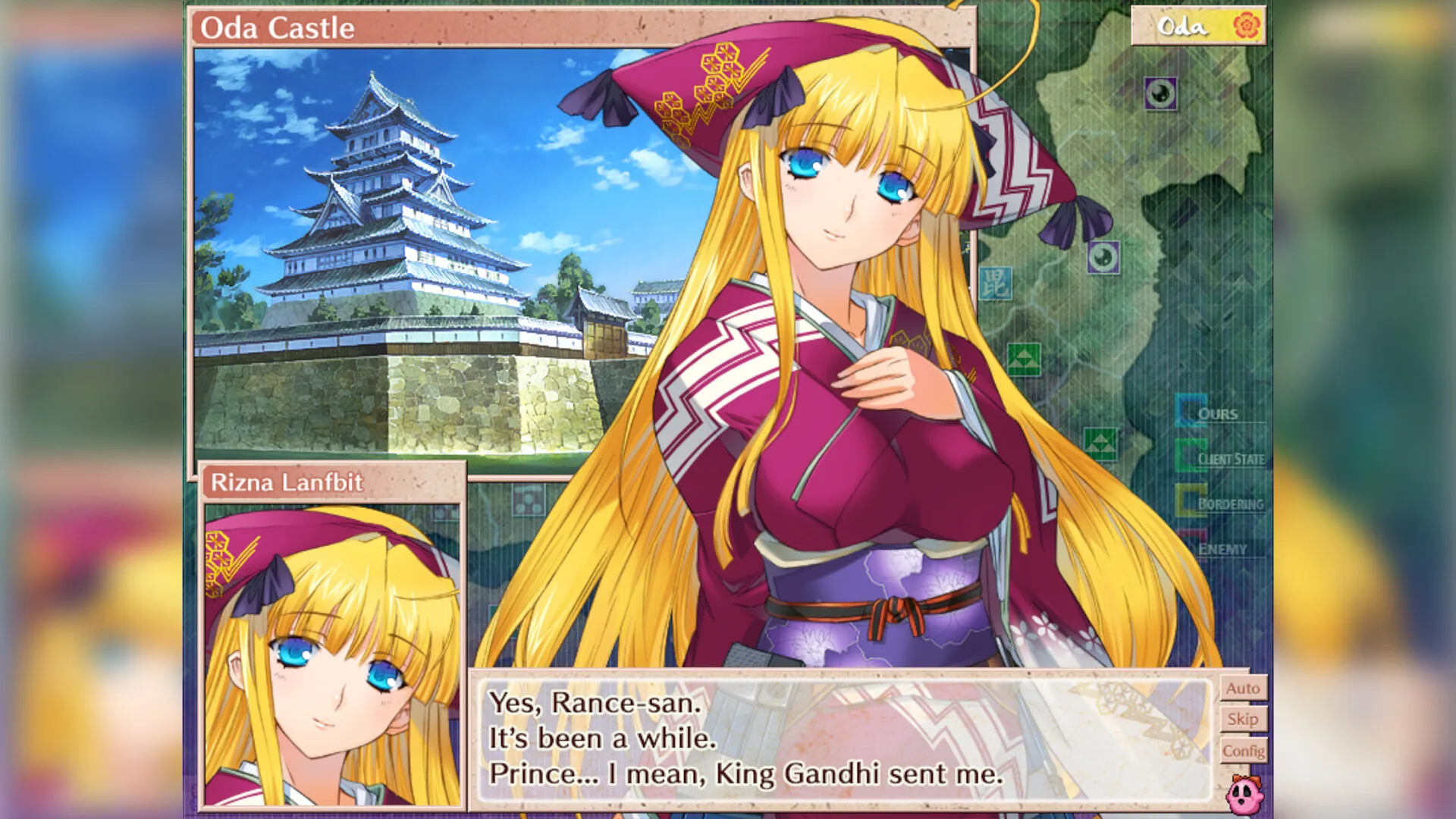
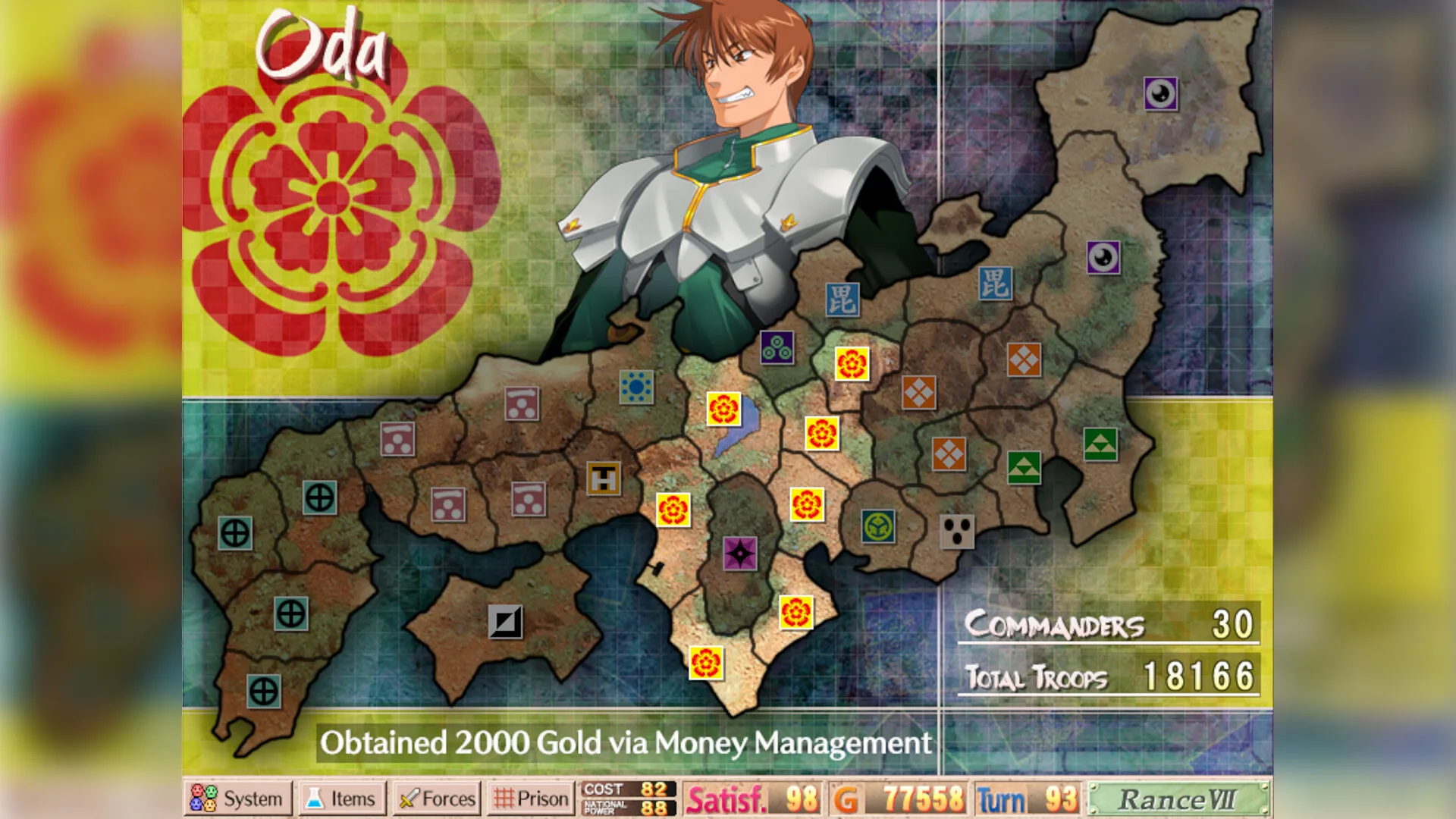
A commander scene from the Windows release.A second commander scene from the recruitment campaign.
Rance
Rance is the warrior protagonist, and he would rather enjoy the campaign than play the hero. He came to Nippon for the hot springs, with Sill beside him, and the feudal state he is handed becomes the excuse for a war of unification. Power is the want he admits. Treat his recruitment as the start of the roster, not as a companion slot you fill later.
Sill Plain
Sill Plain is the mage who travels with Rance and handles the work he pushes onto her. She is present from the opening of the Nippon trip, which makes her the rare commander you do not meet as a prize for a province. In a turn-based battle she is the spellcasting half of a pair that otherwise solves problems by marching. Losing track of what you have asked her to carry is how her scenes turn.
Nobunaga Oda
Nobunaga Oda heads the Oda clan at Owari. He cooks dango and slips away to run a teahouse, which is a strange resume for the man whose province is power 5 with the Miso Katsu Dungeon under it. Kouhime is the other Oda in that house. Recruiting him pulls the Oda political house into the army, not just a cook with a title.
Kouhime
Kouhime is Nobunaga's younger sister, and she keeps the clan's political work moving while he is at the teahouse or on the road. The clan's politics still point back at him. She stands for the Oda in the fourth Sengoku era in Nippon, beside Rance and Sill. On the board she is why Owari is more than a pit and a power number.
Kenshin Uesugi
Kenshin Uesugi is Nippon's strongest swordfighter, called the Goddess of War, and she leads the Uesugi from the front of the army. The Uesugi stake is Sado, shared with the Takeda over the Sado Gold Mine, and Maso, shared with them again over the pit there. Putting Kenshin in the party is a military recruit first. Other commanders already use that title for her.
Isoroku Yamamoto
Isoroku Yamamoto is a Yamamoto princess forced to command for the Ashikaga after they destroyed her clan. That is not a voluntary banner. The Ashikaga holdings are Viper Oil Field, with Petroleum Pit, and Kyo, with Kachi-Kachi Cave. Her recruitment sits on that grievance: she gives orders for the house that ended hers. Read her scenes as command under duress, not as a loyal retainer intro.
Ran Nanjou
Ran Nanjou heads the Nanjou clan. She lost a Houjou succession test to Souun Houjou, and she still has the clan. The Houjou are the champions of Kantou on the story card, with stakes in Saitama, Kazusa 2000, Edo, and Shikokalamity. Ran's recruitment is the other side of that succession: a house that did not inherit Kantou and is still in the war.
Why the party changes the war
A province you conquer supplies the domain. A commander you recruit changes the fights that earn the next province. Rance can win a march he is personally on, and he will still dodge the part where someone has to govern. Sill is how those marches stay supplied with magic. Nobunaga and Kouhime are how Owari's politics enter the camp. Kenshin is how a front line looks when the Uesugi are committed.
Isoroku and Ran are the recruits with a grievance already attached. One commands for the Ashikaga who destroyed her clan. The other lost a formal test to Souun Houjou and leads the Nanjou anyway. If a later battle offers you either of them, the special ability on the card is only half the decision. The other half is which house's story you just agreed to carry into the next route.
Sill is the exception to the province rule. She does not join because you took a capital. She is already on the road when the feudal state is handed over. Everyone else on this list is a house: Oda, Uesugi, Ashikaga, or the Nanjou succession. Mix those two kinds of recruit and the party stops being a stack of identical officers.
Special abilities and the turn you spend
Turn-based combat gives every commander a turn that someone else does not get. A unique hero with a special ability spends that turn on a trick a generic officer cannot copy: a spell, a command, a duel, a political lever. These seven carry those abilities, and they are the commanders the war names first.
Match the name to the house, then to the province. Kenshin points at Sado and Maso. Nobunaga and Kouhime point at Owari. Isoroku points at the Ashikaga lands, Viper Oil Field and Kyo. Ran points at the Houjou succession rather than at a single province. That chain, name to house to land, is the recruitment map.
A special ability spent on the wrong turn is still spent. If Kenshin's turn is used to march past Sado instead of holding the mine, the Uesugi story and the loot diverge. If Kouhime's political turn is skipped for another duel, Owari's house work waits. The ability is powerful because the turn list is short, not because every turn should be a duel.